Premise and player fantasy
Premise and player fantasy focus
Keep “Premise and player fantasy” decisions tied to the current van fault list and the current weather intensity—not last run’s memory.
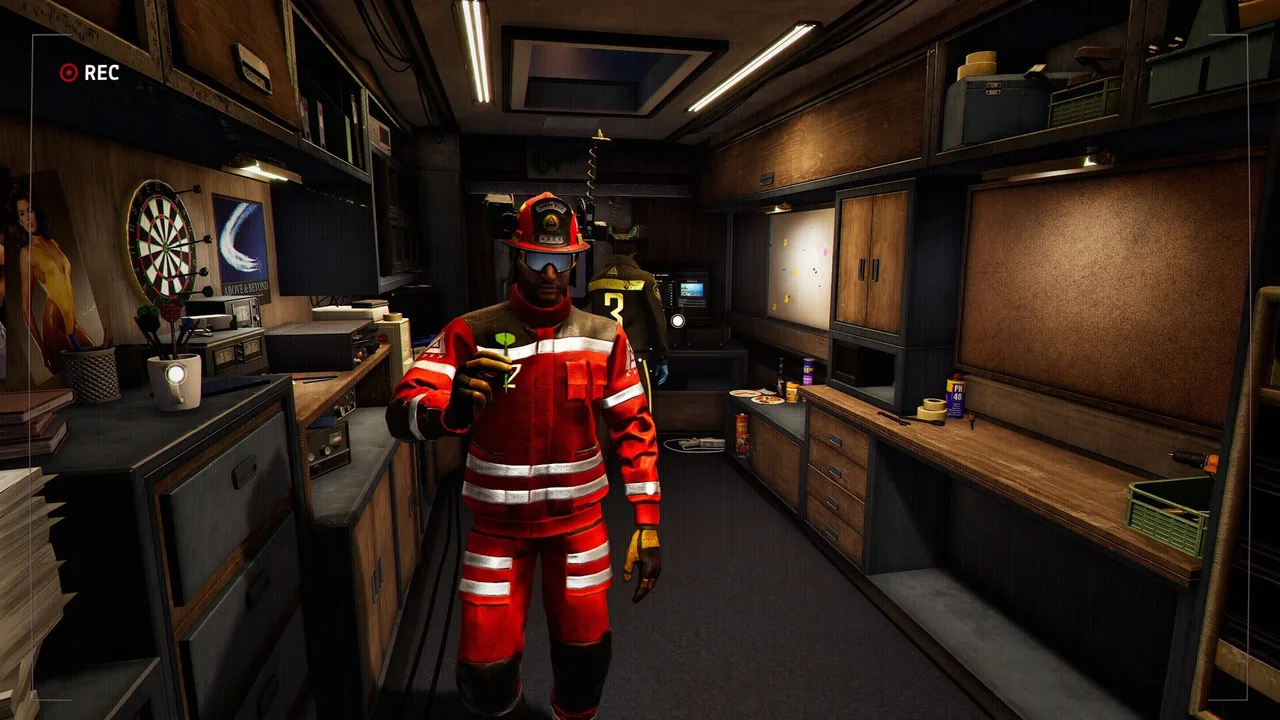
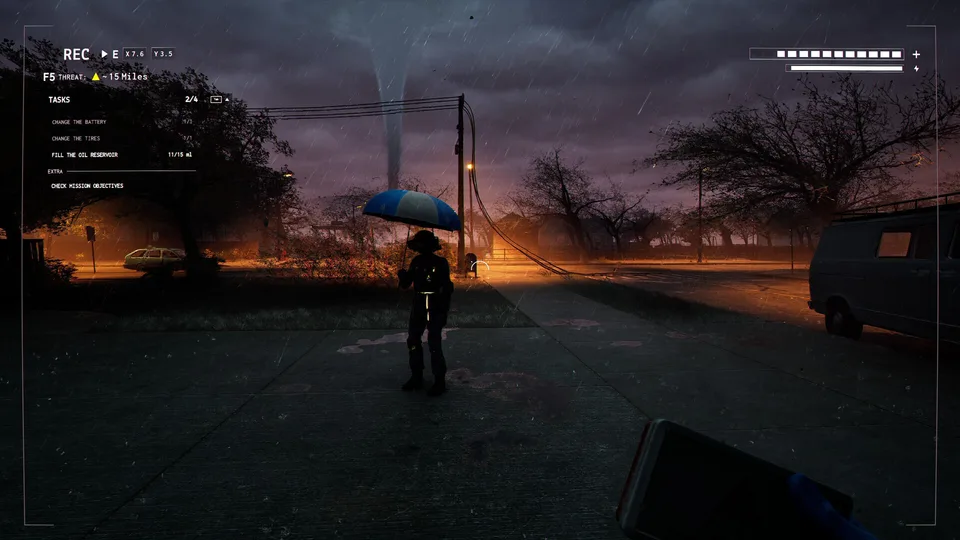
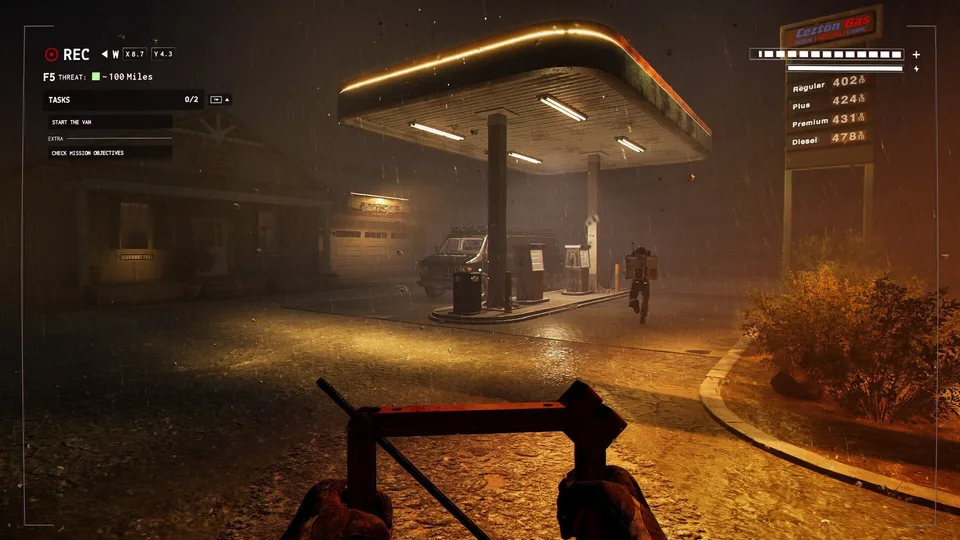
The fiction is corporate storm science with zero safety net. APEX Storm Monitoring Services drops you into a high-priority F5 event to collect data and survive. The fantasy is not a power fantasy; it is competence under pressure. First-person perspective, physics-driven destruction, and procedural weather keep each run tense even after you know the checklist. Steam tags cluster around Physics, Online Co-Op, Survival, Destruction, and Early Access—those tags match how the game actually plays when a house peels open beside you.
Solo is fully supported, but the design clearly expects shared inventory and split search patterns. Sharing gadgets is called out in official store copy. Achievement Designated Driver (win without leaving the van) even proves extreme role specialization is possible when teammates cover the streets and ferry every part back to a seat-bound legend who never steps into the rain.
Official fantasy line
Steam short description: trap, scavenge, fix the van, escape the brutal tornado—with escalating disasters and total environmental destruction.
For “Premise and player fantasy” specifically, treat Funnel Runners Early Access as a living system: re-open the van diagnosis every seed, refuse open-ground greed after airborne debris appears, and convert inventory into repairs before optional Historian or token goals. That single discipline keeps “Premise and player fantasy” useful when patches rename UI chrome or when co-op voice chat collapses into noise.
Match structure
Match structure quick checks
- Re-read “Match structure” goal before leaving the van
- Apply one loop rule on the next building only
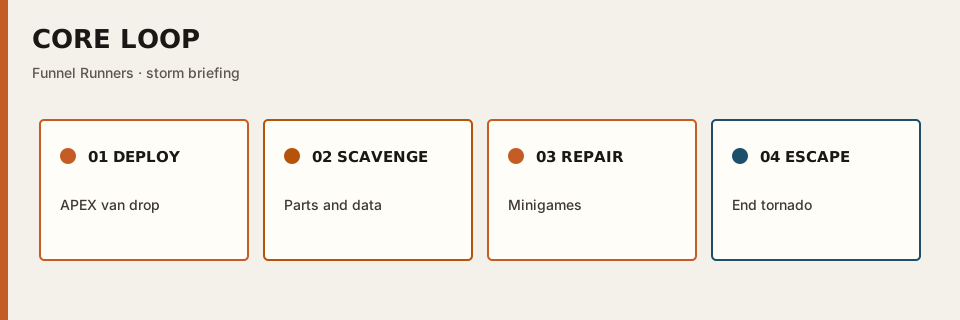
Spawn near the APEX van. Build a shopping list. Sweep nearby structures for parts and tools. Return for minigames. Expand the search radius only when the van is close to ready. When the end tornado intensifies, convert remaining inventory into last repairs or abandon greed and drive before the funnel owns the last straight road out of the suburb.
Loop stages
- Deploy and diagnose
- Tool up
- Local loot ring
- Repair cycle
- Optional data and tokens
- Extract
Randomization hits four axes: map variation (3), weather variation (15), van problem set (from a 6-part pool), and gadget or consumable finds. Memorizing one house path is a beginner trap; learning building types (garage, residence, commercial edge) is the durable skill that survives layout swaps and future biomes.
For “Match structure” specifically, treat Funnel Runners Early Access as a living system: re-open the van diagnosis every seed, refuse open-ground greed after airborne debris appears, and convert inventory into repairs before optional Historian or token goals. That single discipline keeps “Match structure” useful when patches rename UI chrome or when co-op voice chat collapses into noise.
Interlocking systems
Interlocking systems quick checks
- Re-read “Interlocking systems” goal before leaving the van
- Apply one systems rule on the next building only
Van repair is the win condition. Weather is the fail condition. Items are the interface between them. Achievements layer long-term goals (walk distance, scavenger counts, historian collectables, vending spends) without changing the escape objective. Tokens and the van vending machine create a light economy for mid-run top-ups. Information collectables and protocol triggers feed the APEX fantasy and the Historian and Protocol Nerd achievement lines for players who want more than a single escape screenshot.
System interactions
| System | Feeds | Punished by |
|---|---|---|
| Scavenging | Repair readiness, tokens, collectables | Collapse, inventory bloat |
| Repair minigames | Escape readiness | Fails, missing tools |
| Weather | Urgency, hazard achievements | Open-ground greed |
| Co-op sharing | Coverage speed | Poor callouts and duplicate loot |
| Consumables | Stamina and recovery | Hoarding that fills slots |
Because buildings collapse, information value decays with time. A battery in a stable garage is worth more than the same battery two minutes later under a crumbling roof. Co-op multiplies information—one player can watch the sky while another finishes a tire minigame—and multiplies chaos when nobody owns the shopping list out loud.
Interlocking systems micro-plan
- Apply one rule from “Interlocking systems” on the next building
- Return heavy loot before expanding the ring
For “Interlocking systems” specifically, treat Funnel Runners Early Access as a living system: re-open the van diagnosis every seed, refuse open-ground greed after airborne debris appears, and convert inventory into repairs before optional Historian or token goals. That single discipline keeps “Interlocking systems” useful when patches rename UI chrome or when co-op voice chat collapses into noise.
Solo versus co-op
Solo versus co-op focus
Keep “Solo versus co-op” decisions tied to the current van fault list and the current weather intensity—not last run’s memory.
Solo compresses every role into one body. You must keep a shorter loot radius, prioritize multi-use tools, and accept that some optional objectives will burn. Lone Wolf is the achievement for solo end-tornado escape. Co-op up to eight players should assign a driver or mechanic who stays near the van and scouts who call part types instead of vague claims that they found something important without naming it.
Co-op callout template
- Building type plus side of van
- Part or tool name
- Hazard if active
- Whether the building is collapsing
- Whether you need a free inventory slot at the van
For “Solo versus co-op” specifically, treat Funnel Runners Early Access as a living system: re-open the van diagnosis every seed, refuse open-ground greed after airborne debris appears, and convert inventory into repairs before optional Historian or token goals. That single discipline keeps “Solo versus co-op” useful when patches rename UI chrome or when co-op voice chat collapses into noise.
Section “Solo versus co-op” on /gameplay/ is complete when you can state the next tool you need, the next building type you will open, and the weather cue that cancels the plan without argument from teammates.
What Early Access changes mean for gameplay
What Early Access changes mean for gameplay quick checks
- Re-read “What Early Access changes mean for gameplay” goal before leaving the van
- Apply one progress rule on the next building only
Supernova's EA note promises biomes beyond American Suburbs, more weather events, gadgets, quests, and possibly new modes. Night mode and difficulty pacing already shipped from beta feedback. Expect the core loop—scavenge, repair, escape—to remain the spine while the map vocabulary grows. Guides on this wiki will track biome-specific notes as they land; until then, treat suburb patterns as the training ground that teaches priorities transferable to plains, desert, or mountain weather later.
What Early Access changes mean for gameplay checkpoint
Before continuing “What Early Access changes mean for gameplay”, confirm the van list is still accurate and that you are not carrying a duplicate part the team already banked.
Price and review snapshots move weekly. Systems pages on this wiki emphasize mechanics that achievements and developer notes lock in, so a sale banner cannot invalidate the repair checklist or the fact that collapsed buildings stop producing loot.
Gameplay FAQ
Can I finish a run without fighting enemies?
Funnel Runners is survival against weather and collapse, not a combat arena. Asked as “Can I finish a run without fighting enemies? ” on /gameplay/: Three map variations punish single-route memorization hard. Next action after considering “Can I finish a run without fighting enemies? ”: Designated Driver only works when scouts actually return parts. Training takeaway tied to “Can I finish a run without fighting enemies? ”: Tire-d proves flats can stack within a single campaign of deploys.
Do I need a full eight-player lobby?
Solo is supported. Asked as “Do I need a full eight-player lobby? ” on /gameplay/: Historian collectables should ride shotgun on repair paths, not replace them. Next action after considering “Do I need a full eight-player lobby? ”: Vending spends above survival needs are post-green-van hobbies. Training takeaway tied to “Do I need a full eight-player lobby? ”: Collapsed roofs delete both cover and loot permanently for that seed.
Is the map handcrafted or procedural?
The current biome uses three map variations with randomized weather, items, and van problems. Asked as “Is the map handcrafted or procedural? ” on /gameplay/: Solo radii should shrink after the second weather escalation you notice. Next action after considering “Is the map handcrafted or procedural? ”: Co-op sectors beat free-for-all looting past four players. Training takeaway tied to “Is the map handcrafted or procedural? ”: Minigames fail more when started mid-funnel audio panic.
If “What Early Access changes mean for gameplay” is about weather, add an audio cue you will respect without debate; if it is about repairs, add a minigame patience rule; if it is about co-op, add a single extract caller name. For “What Early Access changes mean for gameplay” specifically, treat Funnel Runners Early Access as a living system: re-open the van diagnosis every seed, refuse open-ground greed after airborne debris appears, and convert inventory into repairs before optional Historian or token goals. That single discipline keeps “What Early Access changes mean for gameplay” useful when patches rename UI chrome or when co-op voice chat collapses into noise.